
Poland’s Bolsonaro Moment?
What Happens When a Former Corrupt Justice Minister / Attorney General Finally Faces Justice? The Ziobro case is not just a Polish scandal. It’s accountability case study.

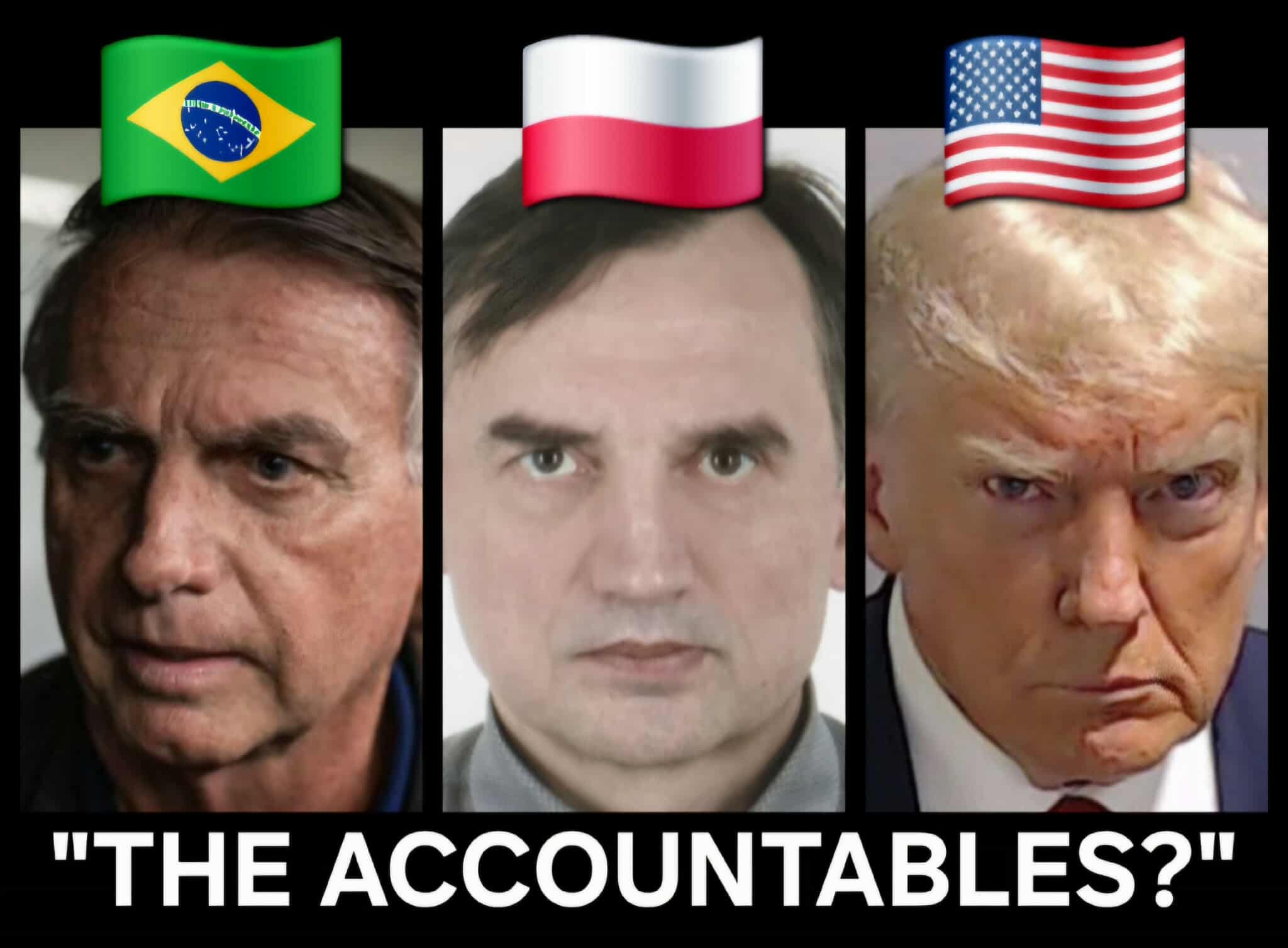
Americans are used to watching accountability debates from the inside — January 6 prosecutions, special counsels, endless cable news loops asking whether a democracy can charge its own former leaders.
Poland is now living its version of that question.
At the center is Zbigniew Ziobro — former Justice Minister and Prosecutor General under the right-wing Law and Justice (PiS) government. For nearly a decade (and earlier stints before that), Ziobro was one of the most powerful men in Poland. He reshaped courts. He merged political and prosecutorial authority. He became the face of a conservative “law and order” revolution.
Poland’s parliament lifted his immunity and a Warsaw court approved a three-month pre-trial detention order against him. Prosecutors are pursuing charges that include abuse of power and participation in an organized criminal scheme involving the misuse of public funds.
Zbigniew Ziobro escaped from Poland - he is “on the run” - currently in Budapest under protective Hungary’s President and Trump’s BFF - Victor Orbán’s wings.
If that sounds dramatic, it is.
Hungary is not a random destination. For years, Ziobro and Orbán represented parallel projects inside the European Union: nationalist, sovereignty-first governments pushing back against Brussels on judicial independence, media pluralism, and EU legal primacy. Not to mention well founded suspicions of representing Vladimir Putin’s interests.
But the bigger story isn’t one man’s con. It’s what happens after populism loses power.
If Brazil, by effectively prosecuting the former President Jair Bolsonaro, represents one model of post-populist accountability, Poland represents another — one complicated by supranational law and a continental legal order within European Union.
The next chapter will not only determine Ziobro’s fate.
It will determine whether Poland’s judiciary emerges independent, politically balanced — or permanently contested.
From “Drain the Swamp” to Hijack the Courts
When nationalist/conservative PiS (Prawo i Sprawiedliwość - literally Law & Justice) came to power in 2015, it campaigned on cleaning up a corrupt, liberal elite in Warsaw. Their slogan? “Poland Is In Ruins” - and only they can make it great again. Sounds familiar? Many Polish voters believed the courts were insulated, slow, and unaccountable — a familiar grievance to American ears.
Ziobro became the executioner of that reform agenda.
As Justice Minister, he:
Merged his role with Prosecutor General, giving political leadership direct control over prosecutions.
Backed legislation lowering the obligatory retirement age of Supreme Court judges — forcing out a large share of the bench.
Supported the creation of a powerful partisan disciplinary body capable of punishing judges.
The fight over the Supreme Court of Poland escalated beyond Warsaw to the Court of Justice of the European Union. The European Union ruled that key elements of the reforms violated EU law. Billions in recovery funds were frozen. Poland entered a sustained constitutional clash with Brussels over the rule of law.
In American terms, imagine if a governing party:
Forced early retirement of Supreme Court justices,
Created a political disciplinary body overseeing and removing federal judges,
And then defied a binding ruling from an external constitutional authority, which is the case for all EU countries.
That’s the scale of the confrontation.
Follow The Money - The Justice Fund Scandal
After PiS lost power in 2023 to a KO (Koalicja Obywatelska - The Citizens Coalition) led by Donald Tusk, prosecutors began reviewing state programs controlled by Ziobro’s office, including the Justice Fund, a pool intended to support victims of crime.
Investigators now allege that tens of millions of dollars equivalent were diverted toward politically aligned groups and projects. Among the accusations: irregular grant procedures and controversial funding decisions tied to surveillance purchases.
Ziobro denies all wrongdoing and frames the case as political revenge.
The court that issued the detention order cited flight risk and the severity of potential penalties. His whereabouts outside Poland have fueled political drama and speculation about whether he may seek protection from ideological allies abroad.
The Bolsonaro Parallel
When Jair Bolsonaro left the office, Brazil faced a defining question: does a democracy prosecute a former leader without deepening polarization?
Poland is facing a similar test. Accountability after populism is volatile.
Too timid — and institutions look weak.
Too aggressive — and justice looks partisan.
The legitimacy of the process matters as much as the verdict.
Why This Matters for Americans
The Ziobro case is not just a Polish scandal. It’s a case study.
Democracies across the West are wrestling with the same tension:
How do you unwind institutional changes made by a populist government?
How do you prosecute former officials without turning justice into payback?
How do you restore trust in courts after they’ve been politicized?
Poland’s conservative government argued it had a democratic mandate to reshape the judiciary. The European Union argued that democracy also requires independent courts insulated from political pressure. Now, the former minister who helped redesign that system is subject to it. That symmetry is striking.
The Narrow Ridge
The Ziobro case should be followed in every democracy, it is not about cheering his arrest warrant. It’s about institutional credibility. Nobody should be above the law.
If the charges are substantiated through transparent proceedings, Poland will demonstrate that rule-of-law institutions can survive political capture.
If the case appears selective or retaliatory, it risks confirming the narrative that power simply rotates hands.
For American readers, the lesson is not partisan.
It’s structural.
Democracy does not end at elections.
Democracy continues in whether former officials can be investigated without the system collapsing under its own political weight.
Poland is attempting that balancing act in real time.
Brazil tried it, and won.
The United States debated it and lost.
The real question isn’t whether powerful men face charges. It’s whether institutions are strong enough to handle them — without becoming what they once opposed.
Well, of course he's hiding in Hungary. The E.U needs to tighten the screws until traitor and Putin fluffer Viktor Orban coughs him up.